Hoover High School opened in 1929.
Two years later, Hoover made its first appearance in a CIF title game.
Three years later came a CIF title. Then another, then another, and either a title or a runner-up finish every year throughout the 1930s.
Hoover’s sports history is impressive.
The Tornado Times conducted extensive research on each decade to highlight the teams and athletes in every sport.
Hoover’s championship history includes the following:
- 16 CIF team championships (including B and C Divisions)
- 17 CIF runner-up finishes
- 74 individual CIF championships
- 19 individual CIF state championships
- 3 CIF state championships
- 1 CIF state runner-up finish
What do B and C Divisions mean?
In 1913, with the founding of the CIF-SS, athletic administrators felt that smaller athletes needed the opportunity to play high school sports. The first “classification” system was based on weight divisions of 90 lbs., 110 lbs., 120 lbs., 130 lbs., 140 lbs., and unlimited. In 1922, the CIF-SS Council voted to adopt a four-point classification system based on grade, age, height, and weight. Four classes were developed: A, B, C, and D. In 1957, the system used height, age, and weight to determine classifications.
Here is a breakdown by sport, highlighting CIF championships, runner-up finishes, and top players in each sport.
Fall Sports
Football
Hoover has had one CIF runner-up finish in football. Hoover lost to Centennial, 12–6, in 1954. The Major Division Player of the Year was John Hangartner in 1954.
The Hoover yearbook provided intriguing information about the football team that advanced to the title game.
“Coming to Hoover in 1951 after a four-year streak of wins at Corcoran High School…Coach Siminski developed football teams that placed second in the Foothill League in 1951, tied for first in the league in 1952, won the league championship in 1953, and went to the CIF finals in 1954,” the yearbook wrote.
The yearbook also noted that Coach Siminski was “a glider pilot who dropped paratroopers over France during World War II.”
The title game had a heartbreaking ending, the yearbook wrote.
“The final heartbreak came when, after the ending gun sounded, an offsides penalty gave the Apaches one more chance at the crown. Fast action followed, but Centennial was able to cross the Hoover goal line to score an extra six points and win the game.”
There weren’t many quarterbacks better than Hangartner.
The 1955 graduate was one of the first quarterbacks to flourish in the West Coast offense, passing for a state-record 2,187 yards in his senior season. Hangartner’s passing record stood for nine years.
In football, Bob Gagliano (Class of ’76) went on to become an NFL quarterback.
Gagliano was chosen by the Kansas City Chiefs in the 12th round of the 1981 NFL Draft.
Over the next three seasons, he played in two games for the team.
In 1988, he spent time on the rosters of Tampa Bay, Houston, and Indianapolis before joining the Detroit Lions in 1989. That season, he appeared in 11 games, starting seven, and helped lead the Lions to a five-game winning streak to finish the year.
Cross-Country and Track and Field
Hoover has had the most individual success in track and field.
Hoover’s track and field dominance started early.
From 1932 to 1951, the Tornados either won a CIF team title or had an individual win a championship.
In 1932, Hoover’s Milton “Dubby” Holt won the CIF 100-yard dash in 10.1 seconds. Holt also won the state championship in the 100-yard dash with a time of 9.8 seconds.
“In track and field, Dubby was a world-class sprinter who shared the ISU school 100-yard dash record for many years with a 9.5-second clocking. Dubby staged many memorable sprint duels with the great Jesse Owens, running a dead heat with him in the 1935 NCAA championship 100-yard dash semifinals,” the Idaho State Journal stated about Holt.
The Tornados won CIF championships in 1945, 1947, and 1949 under Coach Vic Francy, in addition to taking second in 1948.
George Pasquali sparkled for the Tornados in 1945, winning the 100- and 220-yard events in the CIF final in 10.0 and 21.8 seconds, respectively.
Other CIF individual champions for Hoover included John Bradley in the 100 (1947 and 1948), Don Williams (1942), and Jerry Borlin (1949) in the 440.
The 1948 Hoover yearbook stated about Bradley: “John Bradley…brainy, brawny, and bright…a scholarship regular…Look Magazine’s outstanding prep star of ’47, and personality plus…no wonder Johnny is everybody’s favorite.”
The greatest athlete during that run was Jack Davis.
Davis captured the silver medal in the 110-meter hurdles at the 1952 and 1956 Summer Olympic Games. He excelled at Hoover and then at USC, where he became a three-time NCAA champion in the 120-yard hurdles and captured a 220-yard title. Davis was named Glendale’s 15th greatest sports figure of the 20th century by the Glendale News-Press in 1999 and, in 2004, was inducted into the USA Track and Field Hall of Fame.
In 1949, Davis won the CIF state championship in the 120-yard hurdles and the 180-yard low hurdles.
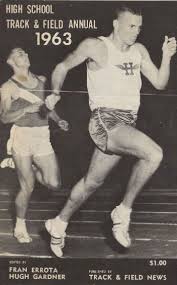
Twelve years later, Forest Beaty shined on the local and world stage.
As a junior, he clocked 20.2 seconds in the 220, just 0.2 seconds off the then-world record. As a senior, Beaty finished in 9.4 seconds in the 100, also 0.2 off the world record at the time.
Beaty was the CIF Southern Section and state champion in the 100 in 1961 and 1962. He captured the CIF Southern Section title in the 220 from 1960 to 1962, in addition to winning a state title in 1961. During his tenure, he set national high school standards in both races and was twice named CIF Southern Section Athlete of the Year.
For his excellence on the track, Beaty was named to the CIF 100th Anniversary Spring All-Century Team.
Beaty graduated from Hoover in 1962 and later from California after helping the Golden Bears win NCAA championships in 1964 and 1965 in the 1,600-meter relay.
“I have a great deal of fondness from my days at Hoover and running in all of the different meets,” Beaty told the Glendale News-Press in 2015.
Hoover had to wait until the 1990s to win another track and field individual championship.
Margarito Casillas provided power for the Tornados in the early 1990s.
The 1993 Hoover graduate won a pair of CIF Southern Section titles and one state Division I crown in cross-country. His biggest accomplishments were winning the Kinney West Regional cross-country title in 1991 and earning first-team All-American honors the following week at the Kinney Nationals. Casillas went on to the University of Arizona, where he secured academic All-American honors and was a key contributor to Arizona’s 1994 Pac-10 Conference championship team.
In the same decade, Hoover’s Bridget Pearson made her mark in the pole vault.
Pearson competed in the javelin and pole vault at UCLA from 1999 to 2004. One of her career highlights was winning the Irish National Championships in 2000 in the pole vault. At Hoover, she was an All-American in the pole vault all four years and the California state champion in 1997. She claimed the CIF title in 1999 and went on to finish fourth at nationals. Pearson also competed in volleyball and water polo at Hoover before graduating in 1999.
She eventually became a coach at Cal State Northridge, where, in 11 seasons, she helped the Matadors win a total of 10 Big West team championships between the men’s and women’s programs.
The Hoover yearbook stated in 1998: “Who hadn’t heard of sophomore sensation Bridget Pearson, who held the school record in the pole vault at 11’8”, was second in the state, and fourth in the nation? This student-athlete displayed remarkable skill in the many sports she played while maintaining a 3.7 GPA and practicing 18–20 hours a week with the varsity track team and her private coach at UCLA.”
There wasn’t a better female runner than Anita Siraki.
Siraki, who graduated from Hoover in 2001 before attending Stanford University, garnered All-American honors in cross-country in 1999 and 2000. She won CIF State Division I championships in 1999 and 2000 and finished second as a senior at the Foot Locker Nationals in Orlando, Fla.
At the 2000 Mount San Antonio College Invitational, Siraki clocked 16 minutes, 38 seconds to shatter the course record of 16:55 set by Julie Stamps of Santa Rosa in 1995.
Siraki was selected to the CIF 100th Anniversary Fall All-Century Team.
Boys’ Tennis
In 1931, the boys’ tennis team was the CIF runner-up, losing to Hollywood, 21–4.
In 1932, Bob Ralston and Bill Sherwin won the CIF Doubles Championship, 7–5, 6–8, 6–4. In 1966, Steve Messmer and Don Dohannon captured the CIF Doubles Championship with a 6–1, 6–2 victory.
The last Hoover CIF team championship came in 2002, when the Tornados won the Division I title.
Dylan Kim swept his three sets at No. 1 singles to lead Hoover High to its first Southern Section boys’ tennis title with an 11–7 victory over second-seeded Palos Verdes Peninsula in the Division I final at The Claremont Club. Hoover finished the season 24–1. Freshman Sam Tadevosian and sophomore Sergy Vagramian were also key contributors to the team’s success.
It was Hoover’s first section title in any sport since 1975, when the Tornados defeated Lakewood, 2–1, in baseball.
Boys’ Water Polo
In 2010, Hoover had one of the biggest stories in not only the area sports scene, but beyond. Hoover boys’ water polo player Hakop Kaplanyan shined as a record-breaking star, as he netted 229 goals to set the CIF-Southern Section record for goals in a season.
Winter Sports
Boys’ Basketball
In 1933, Hoover’s basketball team won the Class B championship, defeating El Monte High School, 28–24.
The Hoover yearbook wrote about the 1931 team:
“The lightweights then defeated Burbank, 20 to 8, to end the first round of play. Following an easy victory over South Pasadena, the Cyclones finished a successful season by romping over the Burbank Bullpups, 20 to 14.”
Hoover’s basketball coach at the time was Howard Butterfield.
In 1941, the boys’ basketball team won the CIF Major Division championship, 23–20. The runner-up was Beverly Hills High School.
The Hoover yearbook wrote:
“[The team] huffed and puffed its way into a lifelong niche in the Purpleville Hall of Fame. The locals, dropping only an early-season practice tilt to Redondo, went on to vanquish ten league opponents and then blitzkrieg Santa Barbara and Long Beach Poly in capturing both the Foothill League and Southern California crowns.
“There was no individual star, five of the ‘interchangeable eight’ acting as high-point man in at least one loop encounter.
“The Presidents encountered Santa Barbara and Long Beach Poly in the C.I.F. playoffs, bouncing the Dons 40 to 20 and slapping the Beachers’ ‘figure-eight’ efforts, 23 to 20. Slim Don Sandison and Warren Currier spurred the local attack, while ‘Big Jawn’ Racine, Bob Hamilton, and Bob Olsen were bulwarks on defense.”
In 1953, Dee Kohlmeier began his legendary career at Hoover — which included 37 years as athletic director — while coaching the boys’ basketball and golf teams. Kohlmeier’s 1954 basketball squad reached the Final Four in the Major Division playoffs before losing to Long Beach Poly.
In 1982, the boys’ basketball team was the Division 3-A runner-up, losing 57–49 to St. Bernard.
The yearbook wrote:
“The Tornadoes swept through their season schedule with a 26–2 record, the best record in Hoover history, winning the prestigious Hoover-Rubank Tournament.
“The powerful cagers not only won the Foothill League, but swept it with a 10–0 record, another first in Hoover history.
“The Tornados defeated Warren High School, 77–50, in that opener. Hoover defeated fifth-ranked Los Altos, 79–72, in the semifinals at the Long Beach Sports Arena. Hoover lost to St. Bernard, 57–49, in the finals.
“The CIF runners-up were the first team, under the brilliant coaching of Kurt Kohlmeier, to go to the CIF semifinals in 41 years.”
Hoover’s greatest basketball player of all time was Joe Hillman.
Hillman, who eventually won a national championship at Indiana University, averaged more than 40 points per game during his senior season at Hoover in 1984. He led the state in scoring that year, and his 41.3 average ranks third on the all-time Southern Section list.
Hillman, the sixth man on Bobby Knight’s Indiana University team, is Hoover’s record holder for points in a season, points in a career, and career scoring average. In 1984, he scored 1,074 points and was named Pacific League MVP for the third consecutive season.
“We would force Joe to either make a layup against three guys or shoot a 25-footer,” said Bob Mulcahey, — a member of the Glendale High 1985 CIF Southern Section Division 4-A championship team. “And he’d still score 40 points per game. He did all of that scoring while being double-teamed all the time. He was unbelievable. You couldn’t stop him.”
Hillman’s senior season scoring outburst ranks fourth on the all-time CIF list for most points in a season. His 1,074 points is behind only Tracy Murray of Glendora (1,505 in 1988-1989), Greg Goorjian of Crescenta Valley (1,259 in 1977-1978) and Leon Wood of Santa Monica (1,203 in 1978-1979).
“In my senior year, I was the only guy who had played varsity basketball before,” said Hillman, whose 41.4 points-per-game average is fifth on the all-time list for a season, trailing Mike Fisher of San Marino Southwestern Academy (45.9), Murray (44.3), Goorjian (43.4) and Wood (41.5).
The Hoover boys’ basketball team last won a Pacific League title in 1996. That’s when the Tornados were led by Mark Hull. Hull played for UC Santa Barbara and shined in his only game in the NCAA Tournament. The then-junior hit a career-high eight three-pointers and tied his best for points with 32, but the 14th-seeded Gauchos couldn’t pull of the upset against No. 3-seed Arizona, falling, 86-81, in a Western Regional contest.
Zareh Avedian also played with Hull on that 1996 title team.
Avedian shined at Division 3’s Cal Lutheran University. He scored more points on the basketball court than any other Kingsman from 2000-2009 with 1,711 and finished with a career average of 20.1 points per game. He earned back-to-back All-SCIAC First Team selections in 2002 and 2003 and, as a senior, was voted the 2004 SCIAC Player of the Year.
Girls‘ Basketball
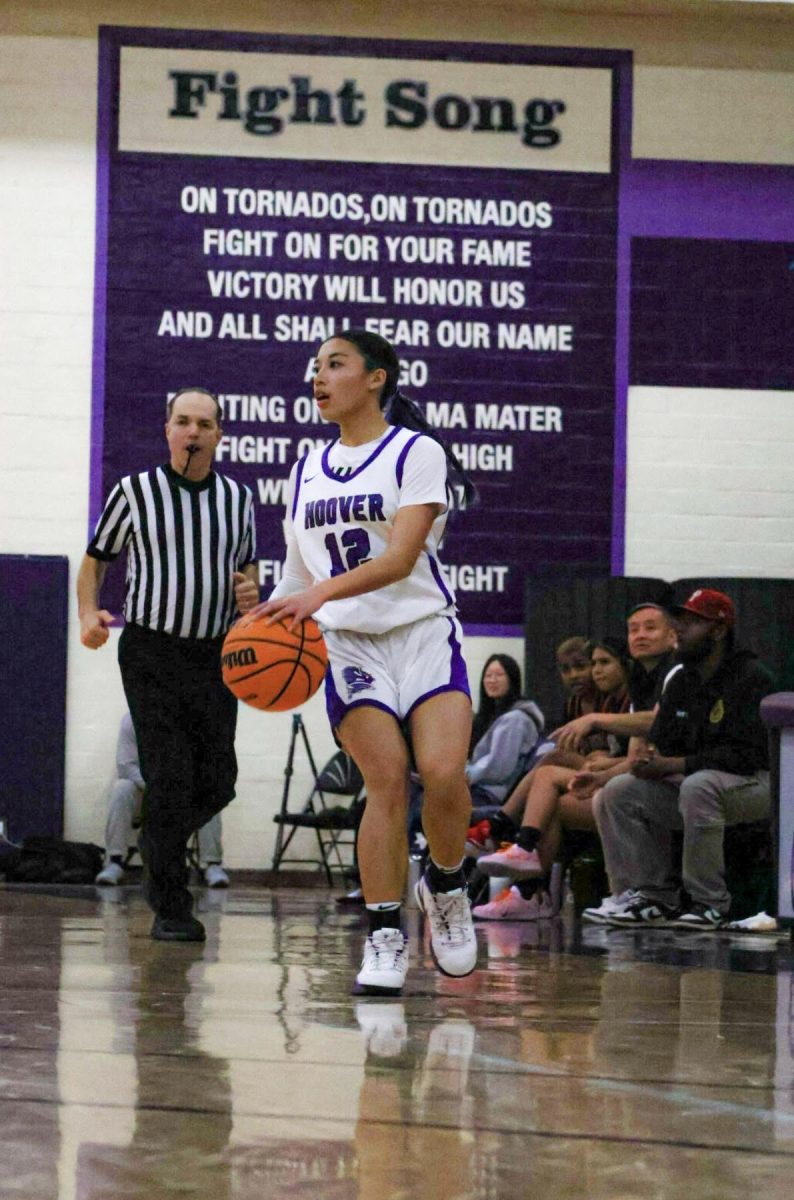
Under the direction of former Athletic Director Jack Van Patten, the girls’ basketball team last made the playoffs in the 2006-07 season, which was their third consecutive trip to the postseason. Hoover’s three-year run was led by Annette Arzoo and Aileen Vartanian
Wrestling
In 1949, Bob Reinhart won the CIF championship in the heavyweight division.
Hoover has also seen success in wrestling in the 21st century.
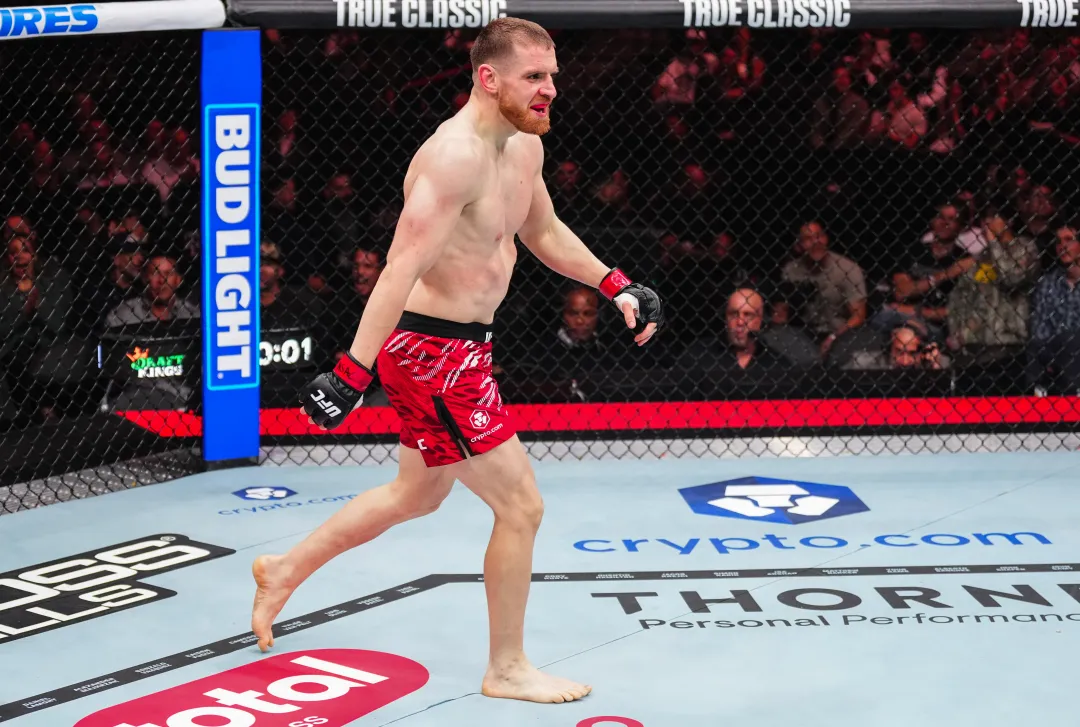
In 2014, Arthur Ghukasyan qualified for state competition, and in 2015, senior Edmen Shahbazyan advanced to state. Shahbazyan began training in martial arts at the age of 9 and, as a teenager, served as a training partner for UFC champion Ronda Rousey. He initially attended Glendale High School before transferring to Hoover.
Shabazyan was poised to have a fast rise up the middleweight rankings after earning a contract on Dana White’s Contender Series, and after winning his first four fights it looked like it would happen again.
However, Shahbazyan experienced some growth pains against higher ranked competition losing five of his next seven bouts, with four stoppage losses to Derek Bunson, Nassourdine Imavov, Anthony Hernandez and Gerald Meerschaert.
The 28-year-old bounced back into a good run with consecutive wins over Dylan Budka, Andre Petroski and Andre Muniz.
In 2025, sophomore Serineh Crane became Hoover’s first state qualifier in girls’ wrestling.
Girls’ Water Polo
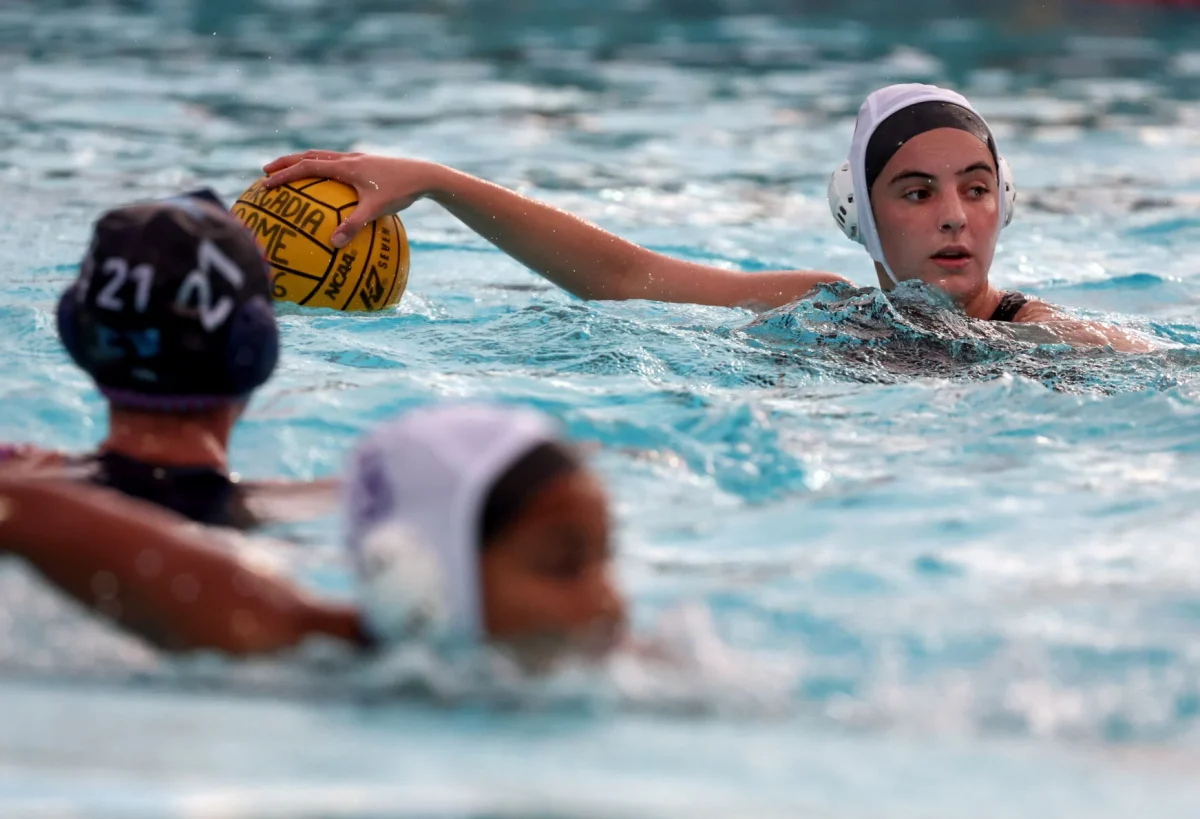
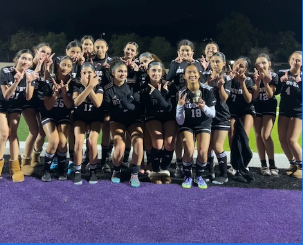
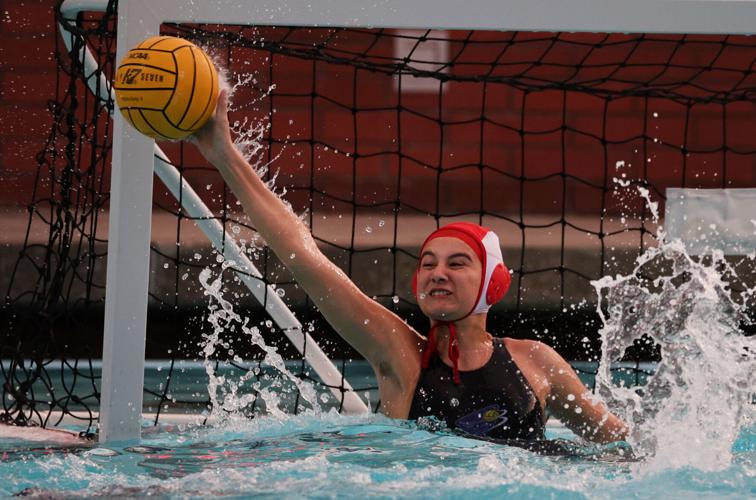
In 2026, the Hoover girls’ water polo team made the playoffs for the first time in program history.
Boys’ Soccer
Hoover won its last Pacific League title in 2006-07, when the boys’ soccer squad, under the direction of Charles Martinez, won the league title.
Spring Sports
Baseball
Under Coach Chuck McMichael, Hoover won a CIF baseball crown in 1975.
Behind CIF Player of the Year Chuck McMichael, Hoover captured the Division 4-A title with a 2–1 victory over Lakewood at Dodger Stadium.
Before McMichael emerged on the scene, Mike Jae was the area’s dominant right-handed pitcher. Jae was named the 1972 News-Press Male Athlete of the Year. He later helped USC win national championships in 1973 and 1974 and became a strong advocate for local youth sports.
Softball
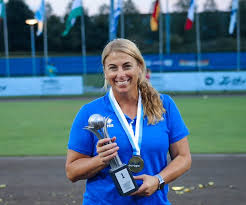
Nancy Evans is the greatest softball player in Hoover history.
A 1993 graduate, Evans was the CIF Southern Section Co-Most Valuable Player in her final two years of high school, earning Division 4-A honors in 1992 and Division II accolades as a senior.
One of the most successful and decorated pitchers in NCAA history, Evans won three national championships at the University of Arizona (1994–1998) and still holds the NCAA record with a .939 career winning percentage (124–8 overall record). She finished her collegiate career with a 0.98 ERA and was named the 1998 Honda Sports Award recipient as National Player of the Year.
Evans was a two-time first-team All-American, the 1997 NCAA College World Series Most Outstanding Player, a three-time College World Series All-Tournament Team selection, and a four-time All-Pacific Region and All-Pac-10 Conference honoree. She was also named to the Pac-12 All-Century Team in 2016, and in 2022, NCAA.com recognized her as one of the 11 best pitchers in collegiate softball history.
On the international stage, Evans participated in the 1996 and 2000 U.S. Olympic Team tryouts and was part of the 1997 U.S. National Team that won a gold medal at the Pan American Games.
Swimming
During the 1950s, it wasn’t just the track and field teams that found success—Hoover’s swimming teams also excelled.
In 1955, Tom Peterson won the CIF 100-yard breaststroke championship with a time of 1:03.8. The Hoover yearbook wrote:
“For his contribution to many phases of Hoover’s activities, ranging from championship swimming to yell leading, Tom will be a long-remembered part of our high school years.”
Peterson repeated as CIF champion in 1956 in the 100-yard breaststroke, improving his time to 1:03.6.
In 1959, Gary Johnson captured the CIF 100-yard breaststroke championship with a time of 1:09.7.
Some of Hoover’s greatest swimmers were Richard McGeagh and Bill Craig.
McGeagh set a national high school record in 1961 in the 100-yard backstroke and won three consecutive CIF Southern Section championships in the event from 1960 to 1962.
He attended USC from 1962 to 1967, taking a semester off to prepare for the 1964 Summer Olympics in Tokyo. At USC, McGeagh competed in both swimming and water polo, earning All-American honors in both sports.
He won the 1963 NCAA championship in the 400-yard individual medley and helped USC capture the 4×100 medley relay championship in 1966. During his USC career, he was a three-time All-American and won four conference titles (two individual, two relay).
At the 1964 Olympics, McGeagh swam in the preliminaries of the 4×100 medley relay, setting an Olympic record in the backstroke leg with a time of 1:01.1, though he did not compete in the medal round. He did win a gold medal at the 1963 Pan American Games in the medley relay and helped the U.S. 4×100 medley relay team set a long-course world record of 4:00.1 in Osaka, Japan, that same year.
Craig and McGeagh spearheaded Hoover’s run to the 1962 CIF boys’ swimming championship, considered by some as the best high school program in the country. Craig, a 1962 graduate, later won a gold medal as part of the U.S. world-record-setting 400-meter medley relay team.
In the 1980s, Mike Baele dominated Hoover swimming. The 1983 graduate earned All-America honors and won five CIF individual titles: the 50-yard freestyle in 1981 and 1982 and the 100-yard freestyle in 1981, 1982, and 1983. He later competed at Tulane University, earning additional All-America recognition.
In 1992, Cori Miller became Hoover’s first female CIF swim champion, winning the Division 3-A 100-yard breaststroke in 1:06.41.
Hoover 2022 graduate Massimo Reyna won the 200-yard freestyle with a time of 1:40.48, earning the school’s first individual CIF swimming title in 30 years. He also placed fourth in the 100-yard freestyle with a 46.74 time.
Golf
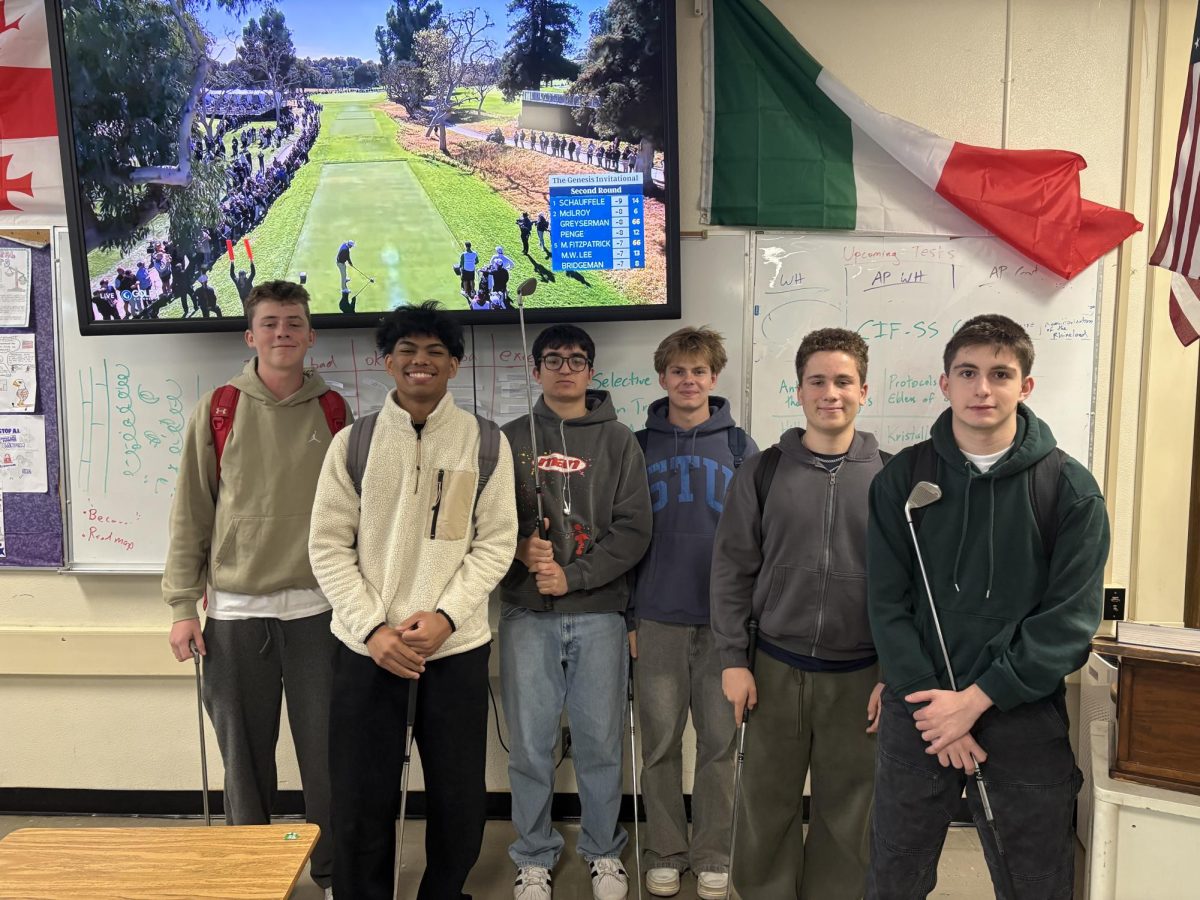
Hoover started a boys’ golf team once again this spring. The Tornados finished runner-up in 1950, losing to Long Beach Poly.